Of the Occult in D&D – X2 Castle Amber


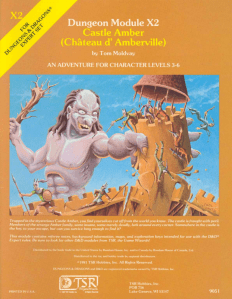
In this article we will examine the occult source material of dungeon encounter #46 in the 1981 Dungeons & Dragons module X2 – Castle Amber.  We will not venture to explain any occult significance of the encounter, neither do we presume any occult intent in its design choice other than as thematic ‘dungeon-dressing.’


The influence of Clark Ashton Smith, Roger Zelazny, and Edgard Allan Poe in the module is readily evident. Other literary influences must include Baudelaire, “Flowers of Evil” (#22); Robert E. Howard, the narcotic black lotus (#50); and even a Norwegian Folktale, in the ‘Three Billy Goats Gruff’ encounter (#16).
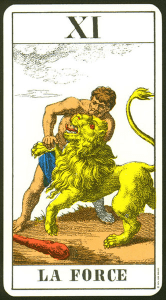

A surreal weirdness permeates the module, and it includes several generic occult-themed encounters, such as the Demon of Death (#53) and the Card Room (#38).[v]


The Magic Letter Square (#46), the first room of the dungeon proper, presents a rather more unique and interesting encounter.
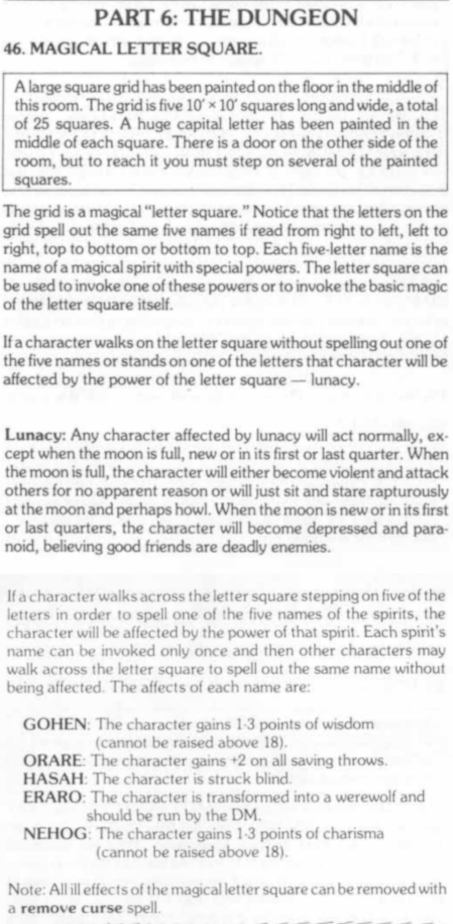

The room description attributes several powers to the letter square, which may be ‘invoked’ either by traversing or standing on the square.[vi] In the encounter, the basic power of the square itself is lunacy, and, among beneficial effects, there are a couple of other possible ill effects, classified as curses, either blindness or lycanthropy.
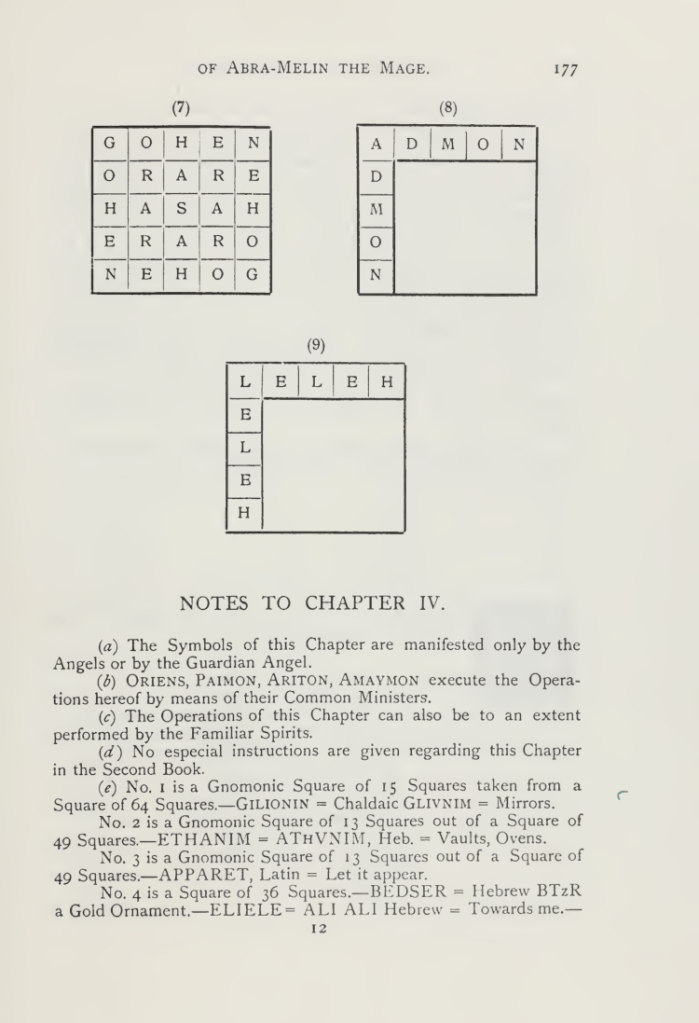

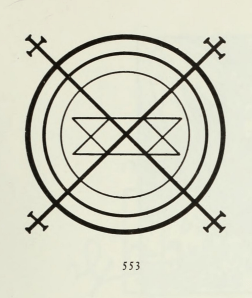
The form of this magic square is taken from The Sacred Magic of Abra-Melin the Mage, most likely S.L. MacGregor Mathers’ edition, which has been the only English-language translation available until quite recently. It is possible that there may have been another collection or encyclopedia of the occult used for reference as an intermediary text, but not necessarily so.


Mathers worked from an imperfect French manuscript—dated circa 1750—rife with errors, of which he was painfully aware.[viii] In his edition he reproduced the letters spelling GOHEN, although he commented in his notes that it should likely read COHEN. An earlier, German printing of the complete text—dated 1725—does give COHEN as the proper reading.[ix]
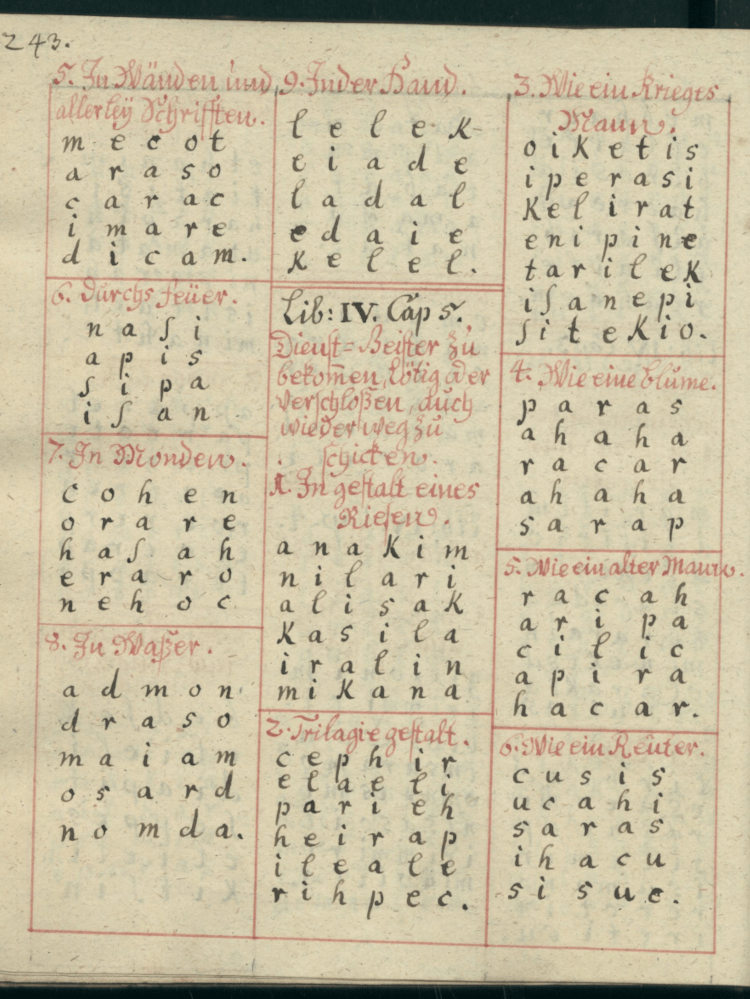

An even earlier, circa 1700, German manuscript also appears intact and gives the spelling as COHEN for this square.[x] The earliest German manuscripts extant—no digital scan available—date from 1608 and are held at the Herzog August Bibliothek in Wolfenbüttel. [xi]

George Dehn, in his contemporary, critical edition, proposes that the attributed author, Abraham von Worms, is a pseudonym of the historical Rabbi Jacob ben Moses ha Levi Möllin, which would support an early 15th century composition.
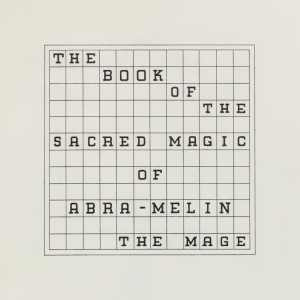

The Abramelin text presents the magic word squares for use in dealing with spirits, and access to these abilities being earned only after great work. The COHEN or GOHEN square is intended for creating ‘visions in the moon.’ This textual association with the moon appears to be the only theme in common with the module’s assignment of the square’s powers to lunacy and lycanthropy.

Of course, the theme of traversing the magic square and running its risks to obtain some benefit suggests some similarity to traversing the Pattern in Zelazny’s Amber novels.[xii] As indicated at the beginning of this article, the module draws upon a wealth of literature, a testament as to how cultured and read was its designer.


[i] Abraham von Worms. The Book of Abramelin: A new Translation. Edited by George Dehn, Translated by Steven Guth. Lake Worth, Florida: Iris Press, 2006.

[ii] Moldvay, Tom. Castle Amber. TSR Hobbies, Inc., 1981.

[iii] Portrait of Clark Ashton Smith. UC Berkely, Bancroft Library, By Unknown author, 1912.

[iv] Swiss (1JJ) Tarot.

[v] The encounter’s description appears to describe cards from a Swiss (1JJ) tarot deck, excepting the hand positions of the Juggler card.

[vi] N.B. The room description, taken literally, would indicate spelling out GOHEN only when a character commences traversing the square from the East on the bottom row, as directionally that series of letters is at the bottom—south side—of the square, rather than at the top.

[vii] Abraham von Worms. The Book of the Sacred Magic of Abra-Melin, the Mage. Translated by S.L. MacGregor-Mathers. Chicago: De Laurence, 1932.

[viii] La sacrée magie que Dieu donna à Moyse Aaron, David, Salomon, et à d’autres saints patriarches et prophètes, qui enseigne la vraye sapience divine, laissée par Abraham à Lamech son fils, traduite de l’hébreu. Bibliothèque de l’Arsenal. MS 2351.

[ix] Abraham von Worms. Des Juden Abraham von Worms Buch der wahren Praktik in der uralten göttlichen Magie und in erstaunlichen Dingen, wie sie durch die heilige Kabbala und durch Elohym mitgetheilt worden sammt der Geister- und Wunder-Herrschaft, welche Moses in der Wüste aus dem feurigen Busch erlernet, alle Verborgenheit der Kabbala umfassend. Köln am Rhein: Peter Hammer, 1725.

[x] Magia Abraham oder Underricht von der Heiligen Cabala. Staats- und Universitätsbibliothek Dresden (SLUB), Mscr.Dresd.N.111.

[xi] Abraham eines Juden von Wormbs Magia (Cod. Guelf. 10.1 b Aug. 2°; Heinemann-Nr. 2112) and Abrahams, eines Juden aus Worms, des Sohnes Simons, Buch der alten Magie (Cod. Guelf. 47.13 Aug. 4°; Heinemann-Nr. 3488). And a 17th century Italian manuscript is held at the Biblioteca Queriniana in Brescia.

[xii] Zelazny, Roger. Nine Princes in Amber. New York: Doubleday, 1970.
Of the Occult in D&D – B3 Palace of the Silver Princess


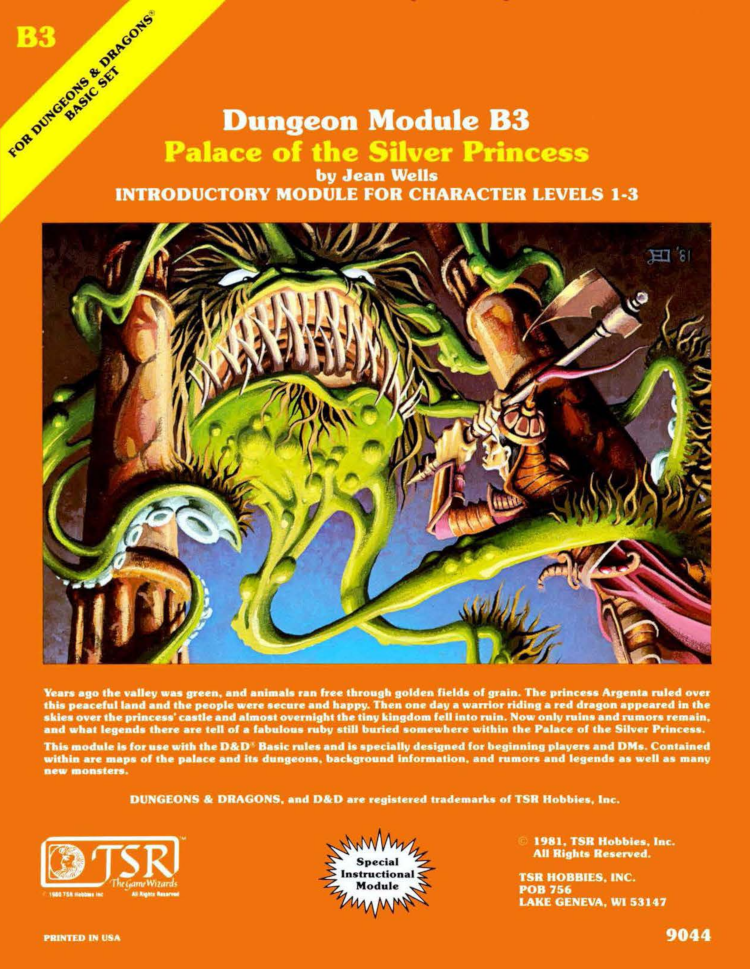
In this article we will trace and identify the sources of some of the more obscure symbols used in illustrating the D&D module B3 – Palace of the Silver Princess. We will not venture to explain any occult significance of the symbols; and we presume there is no meaningful, occult intent behind choosing to include them in the module’s artwork. Neither will we be discussing the module’s history, which may be read over at the Acaeum.[iii] For our purposes, it’s enough to remark that the module underwent a complete revision from its original Orange-covered to its Green-covered form.


Illustration of encounter 28, Catharandamus' room, from Orange-covered module

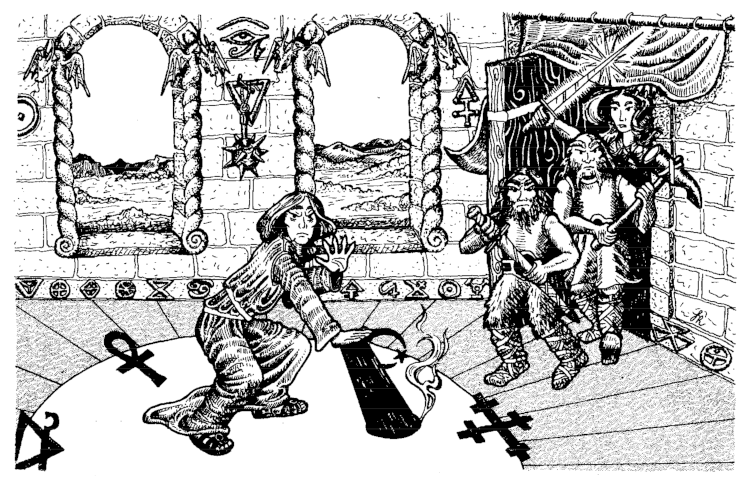
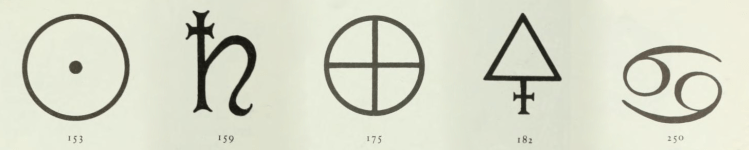
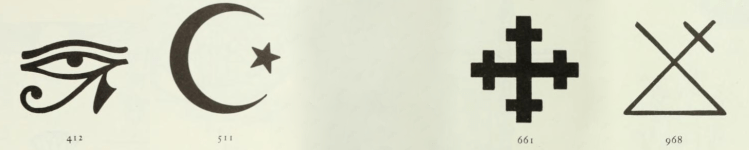
At first glance, it is evident that a preponderance of the smaller symbols on the walls and floor of this illustration have been derived from Lehner’s Symbols, Signs & Signets.[iv]


Collections of the kind were frequently mined for inspiration or material, literary or artistic; and Peterson has documented the influence of Lehner’s Fantastic Bestiary in Eldritch Wizardry (1976).[v] Here, the symbols are largely of a recognizable alchemical, astrological, and religious type.


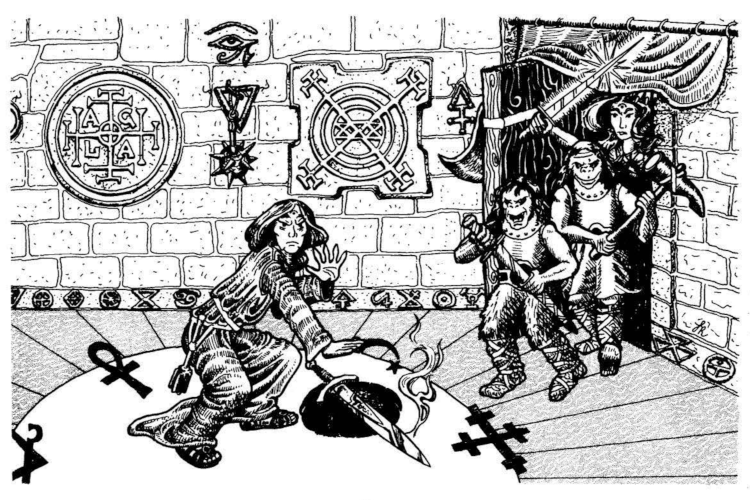
Illustration of encounter 68, Summoning Room, from Green-covered module

Of more interest is the change in illustration from Orange to Green versions of the module. In its original Orange-cover form, the chamber was an exterior-facing room of the palace with windows; and for the revised Green-cover form, converted into an interior room. The accompanying in-text descriptions are different. And, among other alterations to the artwork, the windows have been replaced with a couple of prominent symbols.


AGLA

Textual evidence indicates Lehner’s Symbols, Signs & Signets [vi] as the primary, immediate source here again, rather than his similar collection, The Picture Book of Symbols (1956)—namely, the absence of these two illustrations in the 1956 publication.[vii]


A magic circle

Lehner’s bibliography is generally vague, more of a list of ‘works consulted,’ and the captions he has assigned to these two items, factitious at best. We can however trace their intermediate and ultimate sources.


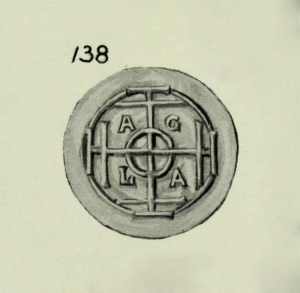
AGLA

Captioned as “Brings Success […]” by Lehner, he appears to have drawn it from William Pavitt’s Book of Talismans, Amulets and Zodiacal Gems, where Pavitt accurately identified the provenance of the figure with John Dee, though he in turn interpolated a significance of the AGLA acronym—i.e. use of the acronym as a medieval charm against Fever—alien to its usage by Dee.


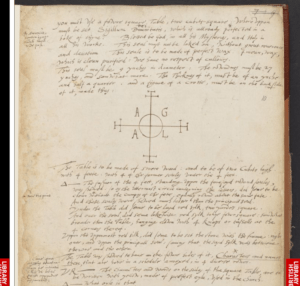
Dee's AGLA seal in manuscript

First recorded on March 10, 1582 in John Dee’s diaries, the ‘Seale with the figure of a Crosse […] made thus’ seems to be unique to Dee.

While there may be another intermediary source between Pavitt’s Book of Talismans and a printing of Dee’s notes, e.g. Mysteriorum Libri Quinque, Pavitt only appears to mention the AGLA acronym’s sometime use as a charm as an historical aside rather than as a specific description of Dee’s figure as illustrated.

In any case, the figure as eventually reproduced in Ernst Lehner’s collection ultimately originates with John Dee, who intended it to be used on the reverse of a large wax seal.[x]


A magic circle

A twelve-volume collection of folklore, occult texts, and more, volume five of Johann Scheible’s Das Kloster contains a number of Faustian Höllenzwang.[xii] Ernest Lehner drew from this volume in particular, and his Symbols, Signs & Signets reproduces several figures from its pages.

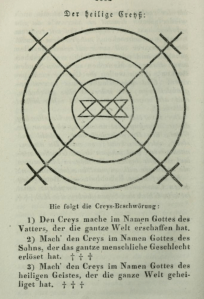
The illustration above, drawn from the section entitled “Doctor Faustens dreyfacher Hoellenzwang,” is captioned as “Der heilige Creyß,” which Lehner would later rephrase as “The Holy Magic Circle.”

Scheible records the text as having been printed in Passau in 1407, somewhat before the historical Faust was born (c. 1480), and before the advent of Gutenberg’s printing press (c. 1436).


Der heilige Creyß

Narrowing our search, we find the earliest publication of this text—its use being still internally attributed to a Bishop Albrecht—in the collections at Heinrich-Heine-Universität Düsseldorf. Its catalog entry is titled Doctor Faustens Dreyfacher Hoellenzwang […].[xiv]

The archivist has identified a 1704 printing for the book, and the work’s typography supports an early 18th century printing. Some of the other, more complex illustrations within the text, later printed in Scheible, are here hand drawn.


Portrait of John Dee, a globe of earth and a compass supported in one hand, an inscribed tablet in the other hand

And so, their provenance obscure, their meanings muddled over time as each successive author has reproduced or repurposed these illustrations, we have traced their descent from occult origins to D&D module B3 – Palace of the Silver Princess.


[i] Wells, Jean. Palace of the Silver Princess. TSR Hobbies, Inc., 1981.

[ii] Wells, Jean and Tom Moldvay. Palace of the Silver Princess. TSR Hobbies, Inc., 1981.

[iii]B3 Palace of the Silver Princess.” The Acaeum.

[iv] Lehner, Ernst. Symbols, Signs & Signets. New York: Dover Publications, Inc., 1969.

[v] Peterson, Jon. “A Fantastic Bestiary.” Playing at the World, 2014, February 16.

[vi] Printed in 1950 by The World Publishing Company and republished in 1969 by Dover Publications.

[vii] Lehner, Ernst. The Picture Book of Symbols. New York: Wm. Penn Publishing Corp., 1956.

[viii] Pavitt, William Thomas. The Book of Talismans, Amulets and Zodiacal Gems. Philadelphia: D. McKay, 1915.

[ix] Dee, John. Sloane MS 3188f.10. British Library. Please note that of this writing, the British Library’s digital collections are still offline due to a cyber-attack. Black & White scans may be referenced HERE.

[x] Magical Disc, Museum number 1838, 1232.90.a, Asset number 964507001. The Trustees of the British Museum.

[xi] Scheibel, Johann. Das Kloster. Weltlich und geistlich. Meist aus der ältern deutschen Volks-, Wunder-, Curiositäten-, und vorzugsweise komischen Literatur, Volume 5. Stuttgart, 1847.

[xii] Höllenzwang, or Hoellenzwang, often translated as a “Coercion of Hell” or “Compulsion of Hell,” popular and usually anonymous texts, mostly originating during the 16th and 17th centuries.

[xiii] Anonymous. Doctor Faustens Dreyfacher Hoellenzwang […]. Passau, 1407 [attrib. 1704]; Electronic edition, Düsseldorf: Universitäts- und Landesbibliothek, 2016.

[xiv] Multiple, diverse texts have also borne this title.

[xv] Casaubon, Meric. A true & faithful relation of what passed for many yeers between Dr. John Dee and some spirits. London: D. Maxwell, 1659.

Gods, Demi-Gods & Heroes: Sources of Illustration in D&D – Polyphemus and Galatea


Title page of Dungeons & Dragons Supplement IV: Gods, Demi-Gods & Heroes.

The title page of Supplement IV: Gods, Demi-Gods & Heroes (1976) presents the reader with an unattributed illustration depicting the cyclops Polyphemus and the sea nymph Galatea. The treatment follows the ‘unrequited love’ telling of their story in Theocritus’s 11th Idyll, [ii] rather than Ovid’s later version in Metamorphoses.[iii]


Printed engraving of Polyphemus and Galatea.

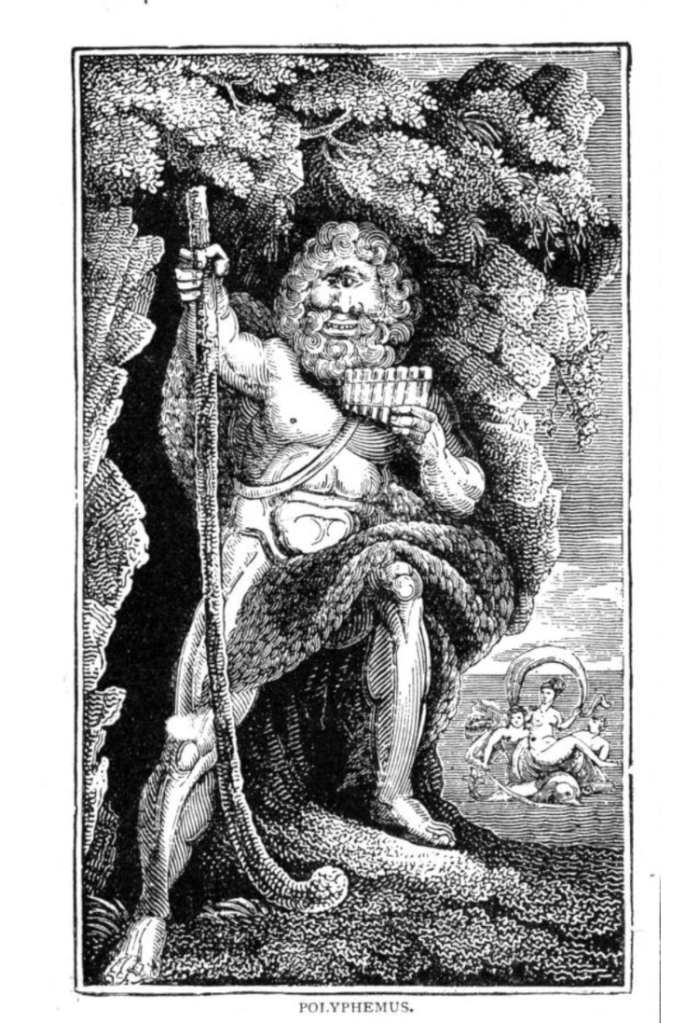
As with Supplement IV, the same illustration is rendered without attribution, caption, or comment in Tuer’s 1886 compilation 1,000 Quaint Cuts. Above is a digital scan of the 1968 reprint of this book which is held at the University of Illinois at Urbana-Champaign.[v]


Printed engraving of Polyphemus and Galatea, with caption.

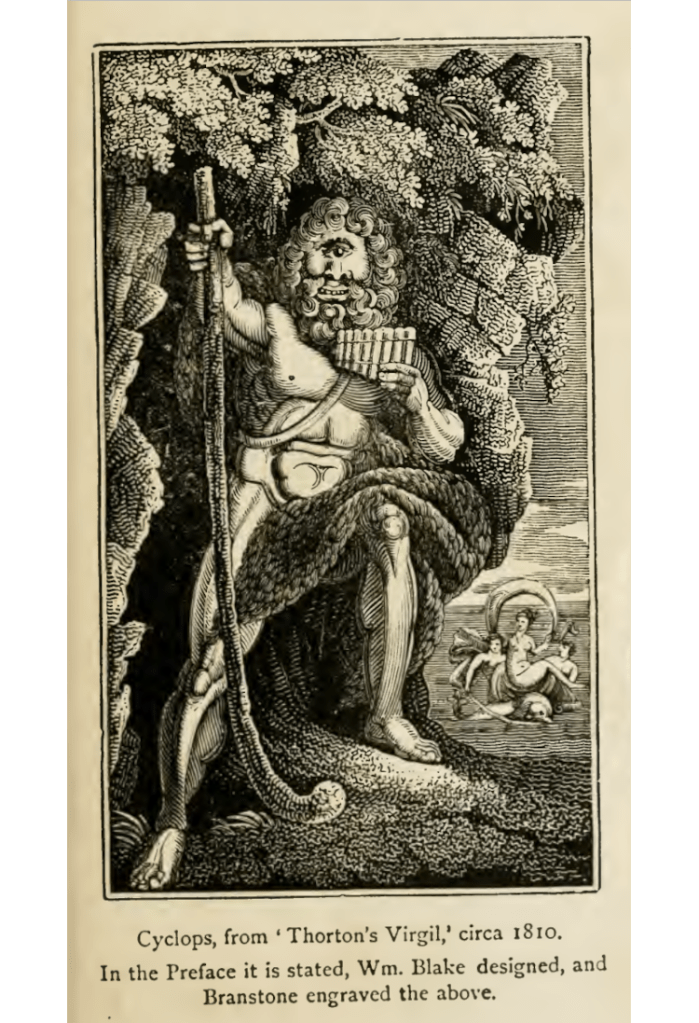
We find the same illustration reproduced in Pearson’s 1890 collection Banbury Chap Books And Nursery Toy Book Literature. Here, the editor has included a caption reading “Cyclops, from ‘Thorton’s Virgil,’ circa 1810. In the Preface it is stated, Wm. Blake designed, and Branstone engraved the above,” a description misstating critical information, as we will see below.


Printed engraving of Polyphemus and Galatea, with caption.

Finally, in 1892, The Strand Magazine also reproduces the illustration, this time identified as a “representation of Polyphemus, at the entrance to his cave, with cloak, staff, and Pandean pipes. The bold, free drawing of the King of the Cyclops is of the school of Blake, but there are points in the execution which diminish the probability of its being Blake’s actual work.” And which description again, except for accurately naming the cyclops as Polyphemus, perpetuates the misrepresentation.


Title page of Thornton's School Virgil.

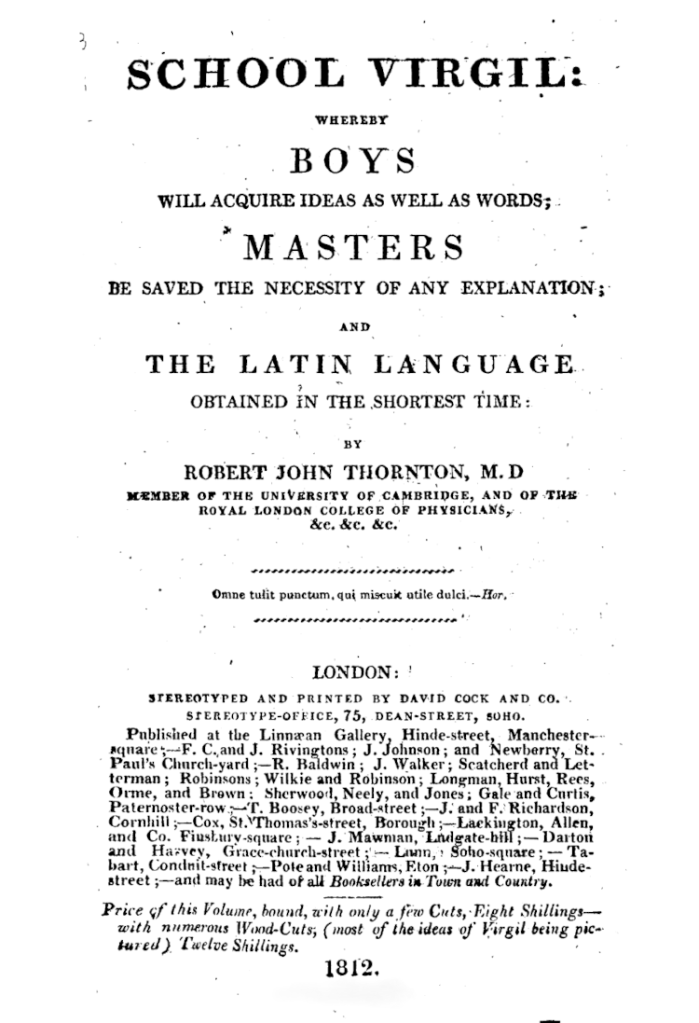
The continuing misrepresentation in various reprints is understandable. Robert John Thornton’s “Virgil” went through three editions, in 1812, 1814, and 1821—and copies are scarce. The title page of the 1812 edition, stereotyped and printed by David Cock and Co., and titled School Virgil, is pictured above. In 1814, Thornton would later publish the supplementary Illustrations of the School-Virgil with F.C. and J. Rivington. That same year he would also publish through Rivington a second edition combining text and illustrations.[ix]


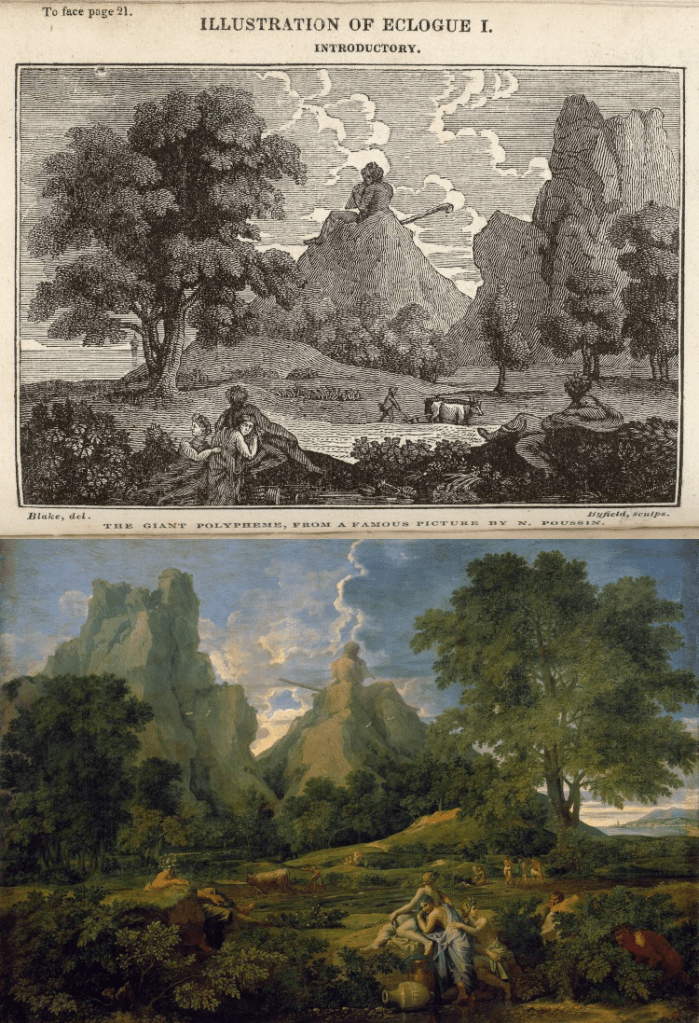
Two images, the first image a printed engraving, the second image a painting by Poussin.

In 1821, Thornton expanded and retitled the work as The Pastorals of Virgil. For this third edition he was able to engage William Blake through a mutual friend for a number of woodcuts and copper-plate engravings, and as designer of some illustrations executed by other hands. It is important to note that prior to this edition, the set of illustrations did not contain any by Blake, who was not engaged with the work until 1820.[xii]

The engraving above, captioned “Illustration of Eclogue I. The Giant Polypheme. From a Famous Picture by N. Poussin. Blake, del. Byfield, sculps.” mirrors Nicolas Poussin’s composition in “Landscape with Polyphemus” (1649).

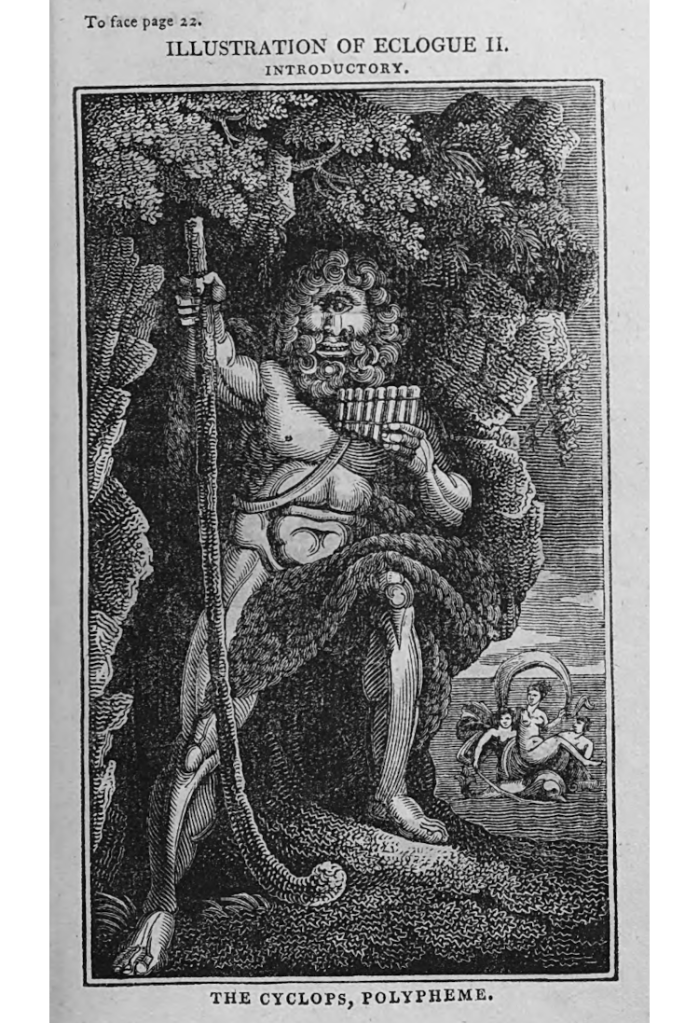
The Banbury reprint, other than misspelling the names of Thornton and Branston,[xiii] and The Strand both appear to have confused the above ‘engraving by Byfield[xiv] from a drawing by Blake of a figure of Polyphemus by Nicolas Poussin’[xv] with the original illustration of Polypheme below.


The original, printed engraving in Thornton's 1814 Illustrations of the School-Virgil.

Captioned “The Cyclops, Polypheme” in the original 1814 Rivington print of Illustrations of the School-Virgil, the artist and engraver are still unknown.[xvii]

Several engravers and artists were involved in the set of original illustrations; however, the ‘Polypheme’ engraving does not appear reproduced in other available texts of the time by associated printers and publishers.[xviii]

In any case, where descriptions have accompanied reproductions of the original illustration, they perpetuated the same misrepresentation on down the line, confusing the engraving’s already murky origins.

As an interesting aside, among the artists who persuaded Thornton to include Blake’s unconventional woodblock engravings in the 1821 edition of The Pastorals of Virgil was the renowned English artist, James Ward (1769-1859).[xix]


[i] Ward, James, and Robert Kuntz. Dungeons & Dragons Supplement IV: Gods, Demi-Gods & Heroes. TSR Rules, 1976.

[ii] Theocritus; Bion; and Moschus. The Greek Bucolic Poets. Trans. J.M. Edmonds. London: W. Heinemann, 1912.

[iii] Ovid. Metamorphoses, II: Books IX-XV. Trans. Frank Justus Miller. London: W. Heinemann, 1916.

[iv] Tuer, Andrew W. 1,000 Quaint Cuts: from books of other days including amusing illustrations from children’s story books, fables, chap-books, &c., &c., A Selection of Pictorial Initial Letters & Curious Designs & Ornaments from Original Wooden Blocks Belonging to the Leadenhall Press. London: Field & Tuer, The Leadenhall Press, 1886; republished by Singing Tree Press, 1968.

[v] Curiously enough, the Urbana-Champaign copy has library due dates indicating it was checked out for most of April and May 1976.

[vi] Pearson, Edwin. Banbury Chap Books And Nursery Toy Book Literature: [of the XVIII And Early XIX Centuries]. London: A. Reader, 1890.

[vii] Newnes, George. “Grandfather’s Picture-Books,” The Strand Magazine, No. 20. London: George Newnes, August 1892.

[viii] Thornton, Robert John. School Virgil: whereby boys will acquire ideas as well as words, masters be saved the necessity of any explanation, and the Latin language obtained in the shortest time. London: Stereotyped and printed by David Cock and Co., Published at the Linnæan Gallery, 1812.

[ix] Sung, Mei-Ying. “Teaching History or Retelling Ancient Stories with Pictures: William Blake and the School Version of Virgil,” The European Conference on Arts & Humanities 2017 Official Conference Proceedings. Japan: IAFOR, 2017.

[x] Thornton, Robert John. The Pastorals of Virgil: with a course of English reading adapted for schools: in which all the proper facilities are given, enabling youtm [sic] to acquire the Latin language, in the shortest period of time: illustrated by 230 engravings. London: F.C. & J. Rivington, Stereotyped and printed by J. M’Gowan, 1821.

[xi] Poussin, Nicolas. Landscape with Polyphemus. 1649.

[xii] Gilchrist, Alexander. The Life of William Blake. London: John Lane, 1907.

[xiii] Allen Robert Branston was an engraver also associated with the original prints.

[xiv] John Byfield per The William Blake Archive.

[xv] Russell, Archibald George Blomefield. The Engravings of William Blake. Boston: Houghton Mifflin, 1912.

[xvi] Thornton, Robert John. Illustrations of the School-Virgil in Copper-Planes and Wood-Cuts. London: F.C. and J. Rivington, 1814.

[xvii] For an interesting comparison of composition of the figures, see Carlo Cesio’s 1657 engraving of Polyphemus and Galatea after Annibale Carracci’s 1605 fresco in the Palazzo Farnese (The Loves of the Gods).

[xviii] Printing from stereotype plates was relatively rare in early 19th century Britain; by 1820 only a dozen printing firms in London did stereotyping. (“Andrew Wilson…”, from Jeremy Norman’s History of Information). Anastatic reproduction wouldn’t arrive until 1841.

[xix] Gilchrist, Alexander. The Life of William Blake. London: John Lane, 1907.

Gods, Demi-Gods & Heroes: Late Romantic Sources of Illustration in D&D – Odin


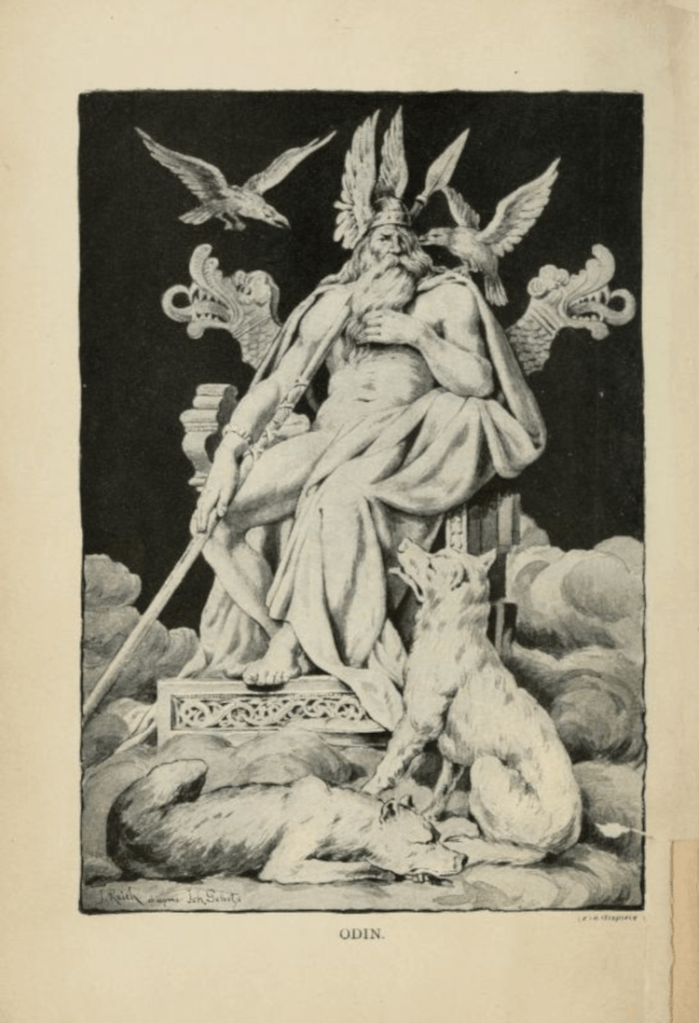
TSR's reprint of Reich's ink illustration of Odin seated on a carved throne.
from Gods, Demi-Gods & Heroes[ii]

Under all manner of constraints and inspiration in the early days of the hobby, TSR, Judges Guild, et. al. commonly made use of old prints and other artwork in their published material. The illustration of Odin pictured above closes out Dungeons & Dragons Supplement IV: Gods, Demi-Gods & Heroes (1976).

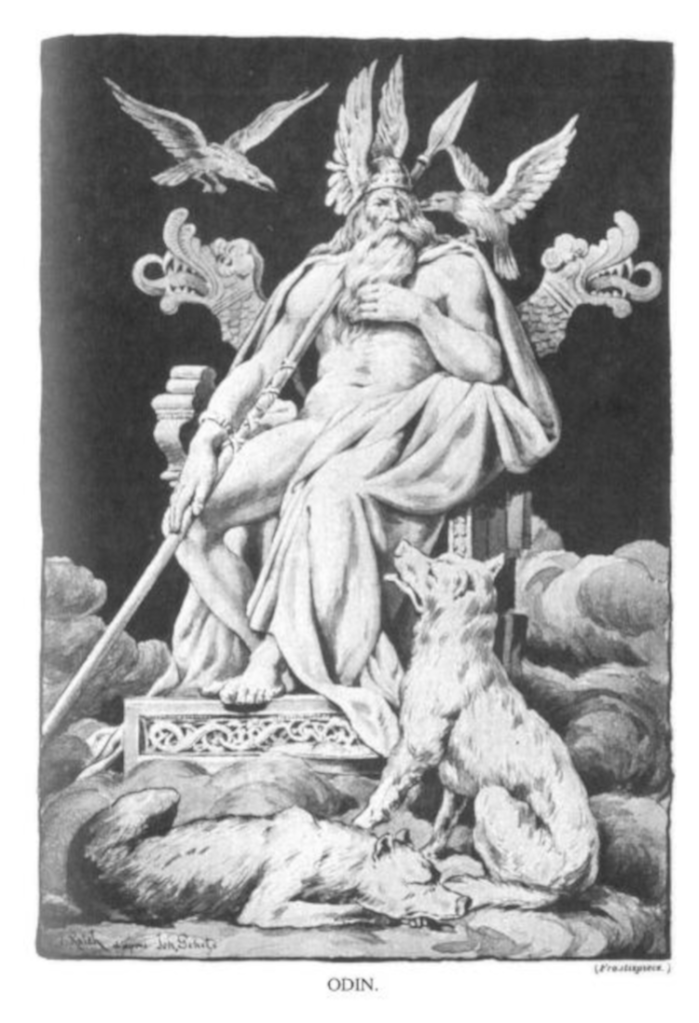
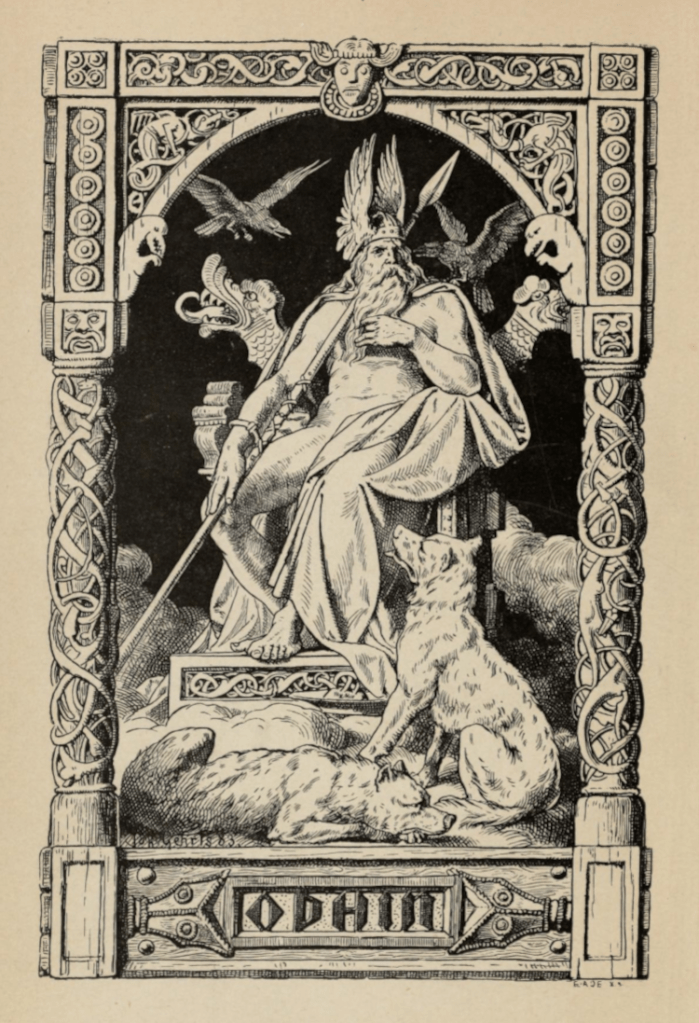
As with much of the old art which appears in the hobby’s early pages, it is included without formal attribution. We are fortunate enough that the artist’s signature is just legible in the bottom left of the frame as J. Reich après Joh. Gehrts, that is “Jacques Reich after Johannes Gehrts.”


Geherts' printed engraving of Odin seated on a carved throne.
from Walhall: Germanische Götter-und Heldensagen [iii]

The printed engraving shown above is that of Johannes Gehrts’ 1883 original, used as the frontispiece of Felix Dahn’s Wahall (1888).


Reich's ink illustration of Odin seated on a carved throne.
from Myths of Northern Lands [iv]

Jacques Reich, following the original composition, reworked Gehrts’ print as an illustration for Hélène Adeline Guerber’s Myths of Northern Lands (1895). It too is here used as a frontispiece, this time with the familiar centered caption reading “ODIN,” and in the bottom right corner, under the framing, “Frontispiece” between parentheses. This is the version which eventually worked its way onto the final page of Supplement IV.


Unattributed copy of Reich's ink illustration of Odin seated on a carved throne.
from Old Norse Stories [v]

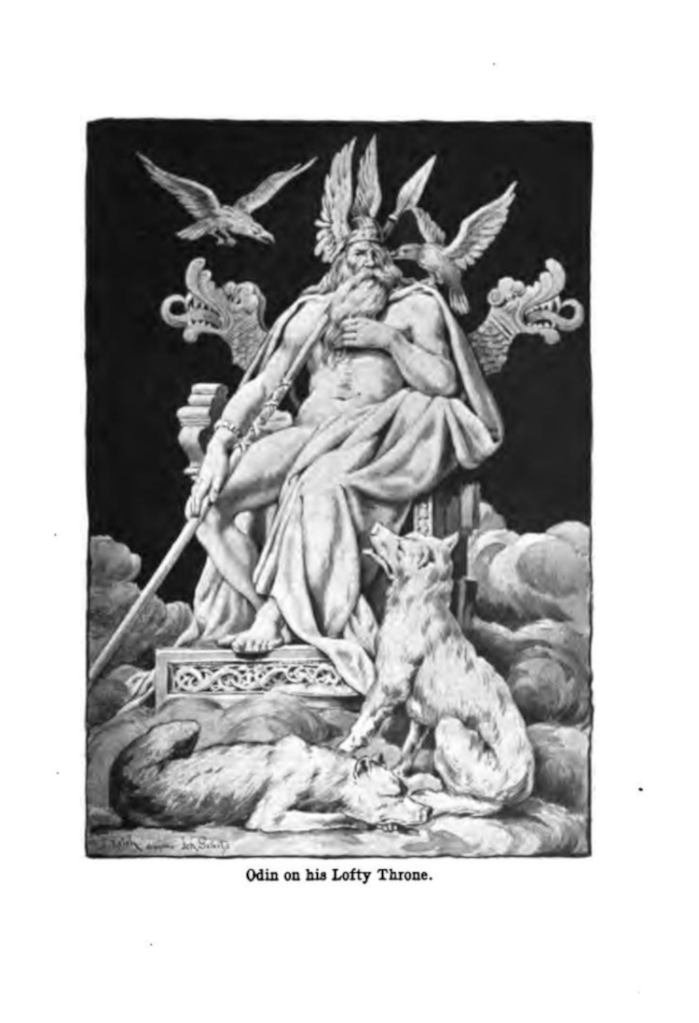
Many of the encyclopedias, compendiums, and collections which inspired or provided reference material in the early days lack formal attribution of their sources as well. Little more than a decade after Guerber published Myths of Northern Lands, Sarah Bradish included Reich’s illustration in Old Norse Stories (1900) with a new caption reading “Odin on his Lofty Throne.”


Perhaps the temporal fame of the original artist was taken for granted; or perhaps the artist’s signature in the illustration was deemed sufficient for a curious reader.[vi] However, the names of artists, their other work, and the sources are often lost along the way. The title page illustration of Supplement IV, for example, is one such piece deserving a post of its own as we recover inspiration from the wellspring of art and literature.


[i] Huysmans, J.-K. Against the Grain. Trans. John Howard. New York: Lieber & Lewis, 1922.

[ii] Ward, James, and Robert Kuntz. Dungeons & Dragons Supplement IV: Gods, Demi-Gods & Heroes. TSR Rules, 1976.

[iii] Dahn, Felix and Therese. Walhall: Germanische Götter-und Heldensagen für Alt und Jung am deutsche Herd erzählt. Kreuznach: R. Voigtländer, 1888.

[iv] Guerber, H.A. Myths of Northern Lands. New York: American Book Company, 1895.

[v] Bradish, Sarah Powers. Old Norse Stories. New York: American Book Company, 1900.

[vi] Note that Guerber’s Myths and Bradish’s Stories share the same publisher.

Origin of the Gygax-Kaye Logo

We will begin our adventures with a brief foray into the Plus of the Appendix N wilderness.


The Gygax-Kaye monogram graced the covers of TSR’s efforts from its first publication in 1973 of Cavaliers and Roundheads until being replaced with Greg Bell’s Lizardman image in 1975. It was the company’s first logo, representing the partnership of Gary Gygax and Don Kaye, and it would herald them through TSR’s first formative years.

Chainmail, 3rd edition

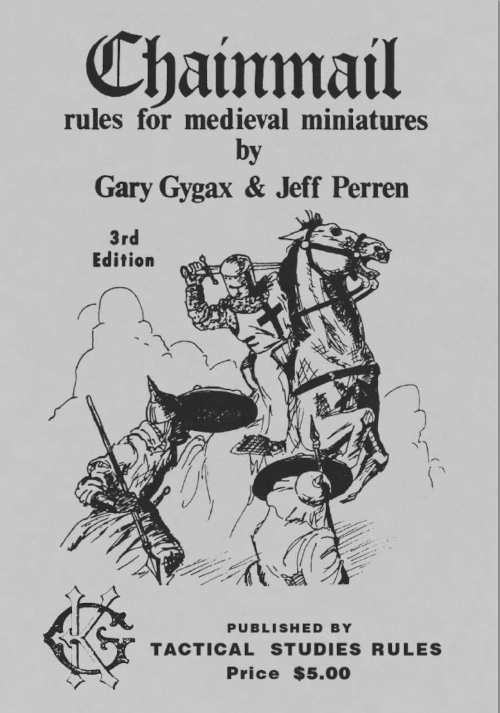
The source material of much of the early artwork at TSR[i] and its precursors has been discussed over the years.[ii] From Jack Coggin’s knight[iii] appearing in the Castle & Crusade Society’s Domesday Book #5 and on the cover of Chainmail to Greg Bell’s Dungeons & Dragons illustrations inspired by panels of Dr. Strange.[iv] However, one question remained outstanding.

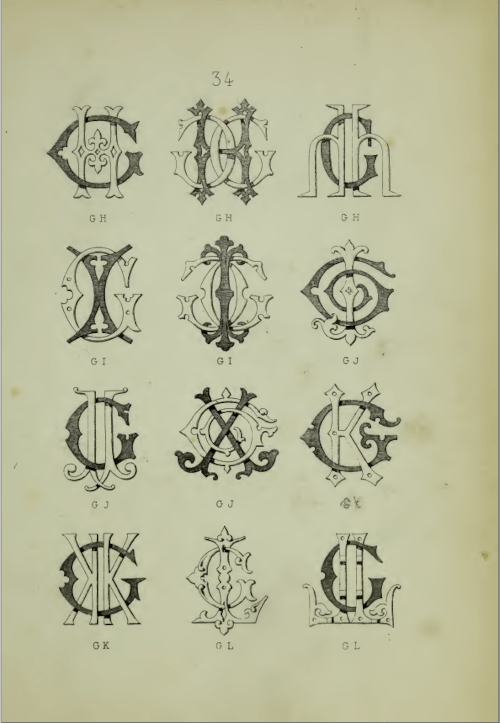
As Art & Arcana relates, Gygax was not a draftsman, and he eagerly canvased his social circle for contributions in those early years without an art budget.[v] Yet the hand that drew the “bold” and “distinctive” monogram does not resemble that of any of the early contributors. What, then, was the origin of the Gygax-Kaye monogram logo?


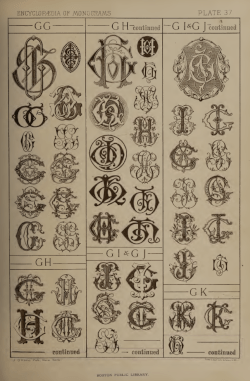
Preliminary research in the Lake Geneva Public Library’s catalogue returned no promising leads. Instead, an effort manually searching texts at the Internet Archive showed some result. James O’Kane’s An Encyclopædia of Monograms, published in 1884, exhibited multiple close, but not exact G.K. monograms (Plates 37, 38, and 55).[vi] Perhaps as a model for inspiration, it was close; but these entries in the Encyclopædia also suggested a period and style to refine the research. And indeed, further searching returned an anonymous record, simply titled, A monogram and alphabet album. Plate 34 contained the exact G.K. monogram logo.[vii]

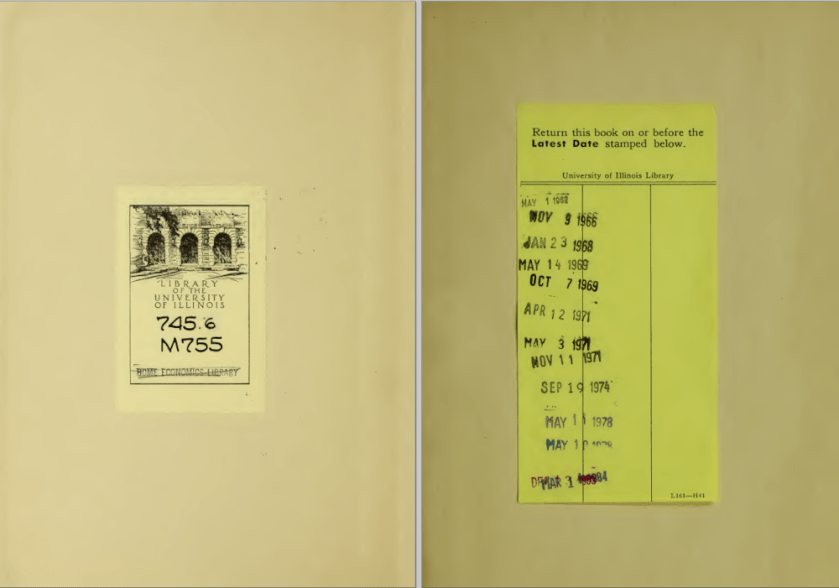
The Internet Archive record was sparse, noting no title page or author, but indicated an 1878 publication date and English as the text’s language. More interestingly was the contributor, the University of Illinois Urbana-Champaign, and the book’s call number, 745.6 M755. Searching the University’s catalogue returned an entry for the book, its location in the Oak Street Library vaults,[viii] and link to a scanned copy hosted at the Hathi Trust digital library.[ix] These additional library records all indicated the book’s language as English, although the few lines of text in the book were clearly written in French.

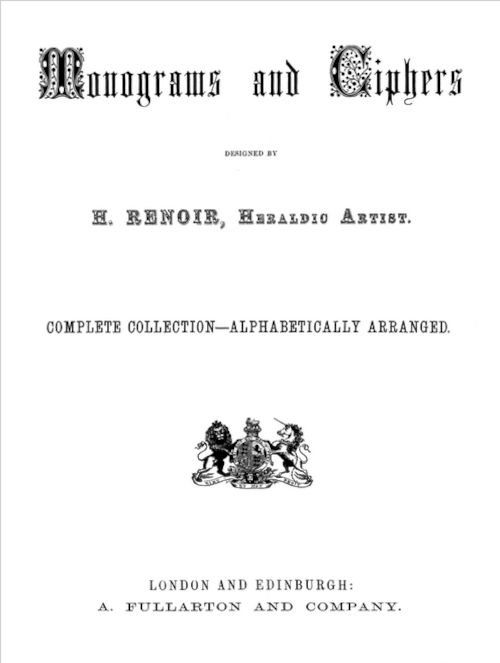
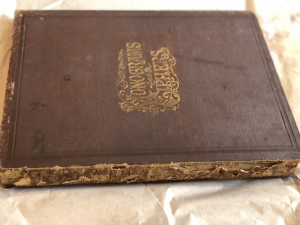
Pursuing the French connection quickly returned a modern, 1970 reprint of the plates in Cirker’s Monograms and Alphabetic Devices, [x]  with a copy being held by the University of Illinois;[xi] and it also revealed the name of the monogram’s original French draftsman: H. Renoir. WorldCat[xii] provided further identity confirmation and various titles, including the original French title Chiffres et monogrammes, and print dates in France (Sarazin, Paris) in Germany, and the English title Monograms and Ciphers, published at Edinburgh.[xiii] The task remaining was to recover an intact copy at auction and examine the English edition’s cover and title page.[xiv] The physical book’s cover and binding were in a state of disintegration, and if the edition is a proximate example of the one held at the University of Illinois, the missing cover and title page are readily explained. Several questions, however, remain.

Monograms and Ciphers


While it is tempting to name the mysteriously labeled A monogram and alphabet album held by the University as the unique source from which someone copied the Gygax-Kaye monogram, Dover had also just recently published Cirker’s Monograms and alphabetic devices in 1970, and that may very well have been the reference text. Nevertheless, the missing title page and the penciled-in “GK” in the “album,” the only such marked monogram in the University’s copy, remain suggestive, together with the April, May, and November 1971 dates stamped on the album’s flyleaf.

A monogram and alphabet album, flyleaf

Still, the evidence so far examined is perhaps at best circumstantial, even considering the tantalizing note in Peterson’s Playing at the World that “By 1970,” Gary’s confidant Len Lakofka was “pursuing a master’s degree at the University of Illinois at Urbana-Champaign.”[xv] It’s tempting to imagine Lakofka and Gygax huddled together over an old, crumbling book’s pages. Yet, without further investigation in physical catalogues, if they are even extent, it is uncertain where either volume was located in the early 1970s.

Which text was Gygax’s source, and who, if anyone, supplied it to him and Don Kaye? The answer to that may perhaps be forever shrouded in the primeval mists of Lake Geneva. But as far as this research can now conclude, the ultimate source of the Gygax-Kaye monogram was one H. Renoir, author, illustrator, and heraldic engraver.


[i] Acaeum. Original D&D Set.

[ii] OSR Grimoire. The Castle and Crusade Society. 2019.

[iii] Coggins, Jack. The Fighting Man: An illustrated history. Doubleday, 1966.

[iv] Maliszewski, James. Grognardia. The Mighty Marvel Method. 2009.

[v] Witwer, Michael, et. al. Dungeons & Dragons Art & Arcana: A Visual History. Ten Speed Press, 2018.

[vi] O’Kane, James. An Encyclopædia of Monograms. 1884.

[vii] University of Illinois Urbana-Champaign. A monogram and alphabet album. 1878.

[viii] University of Illinois Urbana-Champaign. Library Catalogue, 745.6 M755.

[ix] Hathi Trust Digital Library. A Monogram and Alphabet Album. New York, 1878.

[x] University of Illinois Urbana-Champaign. Library Catalogue, 745.61 C496M.

[xi] Cirker, Hayward and Blanche. Monograms and Alphabetic Devices. Dover Publications, 1970.

[xii] WorldCat. Renoir, H.

[xiii] WorldCat. Monograms and ciphers.

[xiv] Ebay. Antique monograms and ciphers designed by H. Renoir.

[xv] Peterson, Jon. Playing at the World. Unreason Press, 2012.